
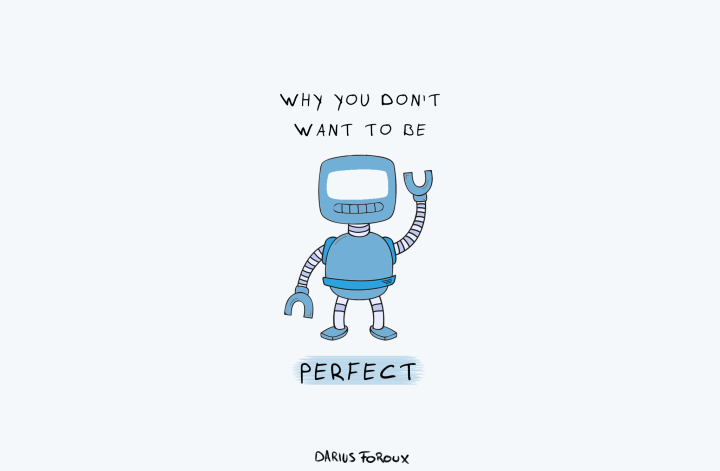
The More Perfect You Are, the More Insecure You Become

perfect perfectionism

Almost 100 years ago, the Russian biologist, Ivan Schmalhausen, developed the Stabilizing Selection theory. He described how a species that evolves to be excellent at one thing tends to become more unsafe to another. That’s why there are no perfect species.1Source: Smithsonian Institute

For example, a tall tree captures more sunlight but it becomes more susceptible to wind damage. Siberian huskies need a lot of muscle to pull sleds, but they have to remain light enough to stand atop the ice.

Among humans, babies of low weight lose heat more quickly and get ill from infectious diseases more easily. Meanwhile, larger and heavier babies are more difficult to deliver through the pelvis.2Source: Memorial University That’s likely why most people have “average” height. It’s easier for humans to survive when they’re born with just the right birth weight.

There are always inefficiencies in nature. Becoming perfect tends to backfire, so species rarely evolve to become perfect at anything. These imperfections are what allow us all to survive and thrive.
Continue Reading

To Build Inevitable Wealth, Simply Avoid Financial Ruin

Build Inevitable Wealth

In 1942, the world was at war. In December of the previous year, the United States entered WWII when Japan attacked Pearl Harbor.

By that time, the US got into a war that started in 1939. While Americans were quick to adjust back at home, by turning factories into manufacturers of weaponry, the war itself didn’t play out well at all. 

America was struggling in the Pacific. It was a rough first year with many casualties. Some people started to lose faith. 

That was the year an 11-year-old boy made his first stock purchase. He bought six shares of Cities Service, an energy company, for $38 per share. He bought three shares for himself and three shares for his sister, Doris Buffett.

Continue Reading

When Procrastination Turns Into Regret (and how to avoid it)

Procrastination Turns Into Regret

One of my college professors once said, “I used to be a doctor” during a lecture about business strategy. I instantly put up my hand to ask him why he switched careers. I wondered whether procrastination was involved.

He laughed and said:

“I went to med school and worked as a GP for nearly 20 years. Then, I thought, I actually want to become an academic so I got my Ph.D. in business. And now I’m in my second chapter.” 

I was intrigued and went to him after class. “May I ask how old you are?” I asked.

“I’m 61. And I got my Ph.D. when I was 55,” he replied. I was surprised and he could tell. I had never heard of someone who made such a big career switch at that age.

In my environment people gave up on learning and developing themselves in their 40s. So I asked, “How did you make that decision?” He answered:

“Life is long and you can do a lot of things. I let my curiosity drive me. For example, just the other week, I read about something fascinating. If you combine all the energy that the stars give off, it’s much more than the energy the sun gives. So why is it dark at night?”

“I have no clue,” I replied.

“You’re not alone. In fact, no one knows. It actually shouldn’t be dark at night. Isn’t that fascinating?”

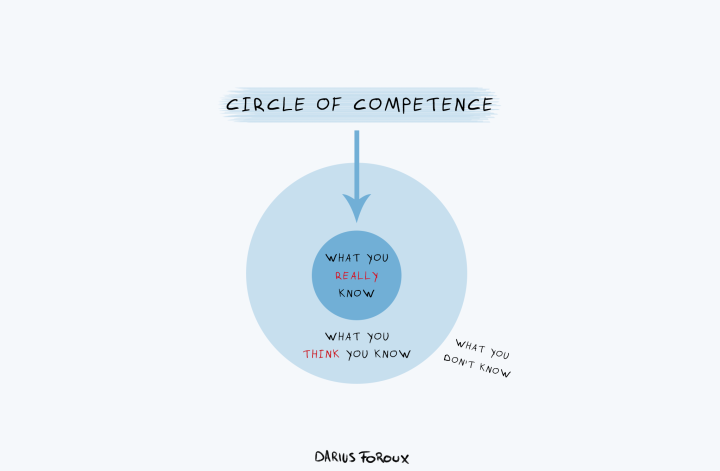
I still use that example every time I talk about the mysteries of life and the limitations of human knowledge. There are many things we don’t know. I asked the professor about what it was like to go back to school in his 50s.

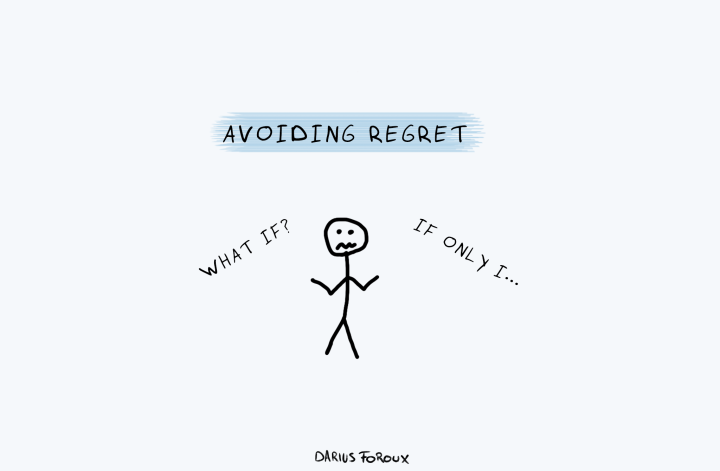
“I don’t regret it for a second. I knew it was something I wanted to do. I actually wanted to do it many years earlier. If I didn’t go for it, I knew I would regret it later in life.”

Continue Reading

Wasted Time Today? Here’s How to Get Back on Track

wasted-time-today-get-back-on-track

We’ve all wasted time. But sometimes, we waste a bit too much time. The other day I watched a Skip & Shannon video on YouTube (a sports show mostly about the NBA and NFL), and then, I watched another video about the NBA. I watched the first video around 10 pm.

The next time I looked at the clock, it was about 12:15 am. Wait, what? More than 2 hours on my tablet? What happened? Well, wasting time. That’s what happened. 

When you do it occasionally in your free time, it’s no big deal. But there are many people who waste time during the day at work. A while back, I did a study and found that at least 88% of the workforce admits to procrastinating for at least one hour on a typical workday.1Source:Procrastination study

Continue Reading