
Why You Always Sell Your Stocks at the Bottom (and How to Stop)

Sell Your Stocks

If you sell your stocks now, you’re likely doing so at a loss.

In 2022, the S&P 500 closed down nearly 20%, its worst performance in 14 years. The technology index, Nasdaq 100, performed even worse at minus 28% on the year. 

By the end of 2022, I started seeing more reports in the media about how individual investors stopped investing. Trading activity and net inflows started to go down. 

In a WSJ article, one of those individual traders said:1Source: The Wall Street Journal

“It was fun for a while, things were going up and down pretty fast.”

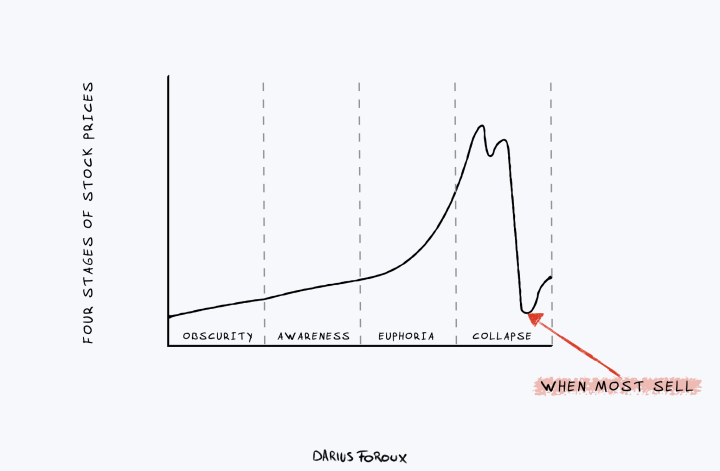
The latter part is when people start to lose interest. Here are the different stages of stock prices:

During the Collapse Stage, people usually get out because every investor has a breaking point.
Continue Reading

The 5 Habits of Financially Responsible People

Financially Responsible People

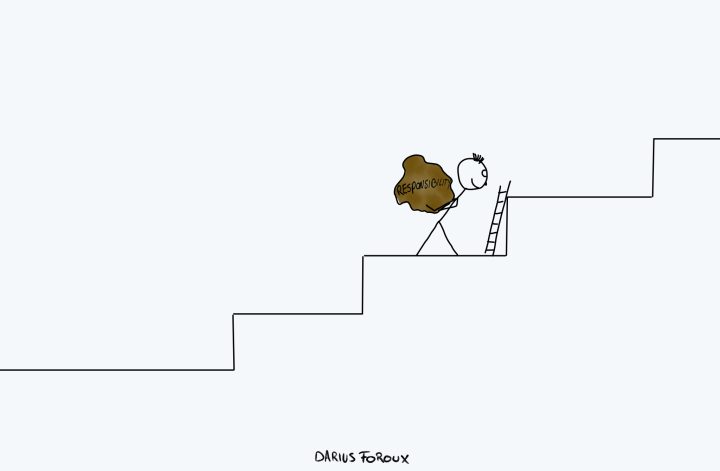
The way you treat your money is a result of the habits you have. This is what sets financially responsible people apart from others. And I’m not only talking about the habit of spending.

If you’ve tried to change your spending in the past and failed, I’m not surprised.

Being financially fit and responsible is a lifestyle. It’s not just about what you do with your money. People who are financially responsible are…

  • Intentional with their spending
  • Inwardly focused and enjoy the small things
  • Saving money diligently every single month
  • Spend less than they earn

It’s about how you live your entire life. The good news is that you have the power to change your life.

Simply change your habits. People often say it’s difficult to change because they just can’t help but fall back on their old habits.

That’s true. And that’s not the only challenge. Especially when it comes to our finances, we have to go against our nature. Think about it. Saving for the future doesn’t make sense from an evolutionary point of view. 

But as the French philosopher Blaise Pascal said:

“Habit is a second nature that destroys the first.”

What follows is a list of habits I believe will replace our destructive first nature when it comes to money. 

Continue Reading

4 Principles to Invest Wisely and Avoid Common Market Pitfalls

Common Market Pitfalls

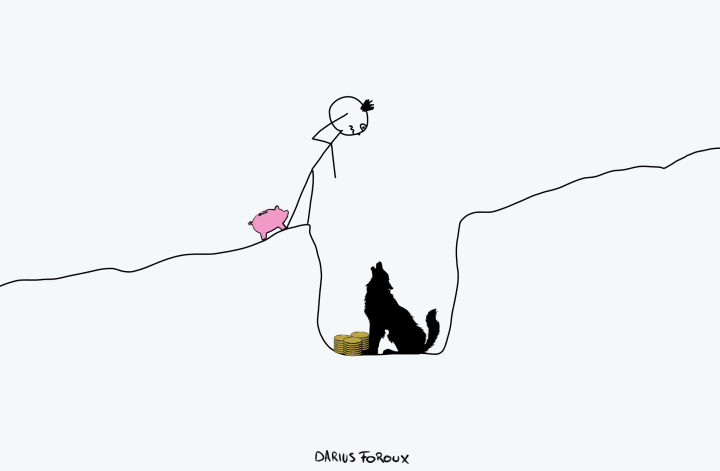
Investing in the stock market is dangerous. How do you invest wisely when there are so many investing and market pitfalls that take away investors’ money?

It’s like the Brothers Grimm fairytale about the seven poor little goats. In case you forgot or never heard it, here it goes.

Once upon a time, there was a family of seven little goats who lived in the forest. One day, their mother left to go shopping and when she was gone, a wolf appeared at the door looking for dinner. 

He tricked the seven little goats into letting him inside, which they of course did because he disguised himself and talked nicely to them. 

When the goats let him in, he ate them all. Except for one little goat who managed to hide. 

The mother came back and found the little one, but the others (including the wolf) were gone. 

She was furious and determined to take down this wicked wolf. She hunted him down and used a pair of scissors to cut the wolf’s belly open, and the six children jumped out miraculously unharmed.

This story has a happy ending. But when big bad wolves trick us into giving them our money, we don’t see that money again. 

In this article I’ll share 4 principles you must be aware of if you want to avoid financial wolves.

Continue Reading

The Simple Mental Model That Changed My Financial Life

financial mental model

When it comes to spending money, I’ve made so many mistakes. When I think about the amount of money I’ve wasted in the past, I feel bad in my stomach. I didn’t have the best mental model for my financial life back then.

As someone who practices Stoicism and Mindfulness, I don’t get attached to those feelings. But still, it does hurt a little bit.

For instance, I think I bought a new winter jacket almost every year until four or five years ago when I finally decided to spend a grand on a high-quality jacket.

I spent probably twice as much in the ten prior years. But now that I have a great (and warm) winter parka, I don’t even think about getting a new one. So I’m not spending any more money. I’m also not spending time and energy on finding new jackets. 

I call this way of looking at the world, or mental model, “Save time and money by spending well.”

In most languages, there’s a saying that captures that philosophy. In The Netherlands, we say, “Buying cheap is expensive.” But this is not only true for buying things.

In this article, I will share 3 personal examples of my life where I applied this mental model and how it changed my life financially.

Continue Reading