When I worked at a large IT advisory firm in London, there was a guy on my floor named Will.
Cheap suit. Messy hair. Wrinkled shirts. Beat up shoes.
And he had one of those old brown messenger bags that your history teacher rocked in high school.
We called him “the Postman.”
Will didn’t look ambitious at all. He didn’t talk big. He didn’t try to impress anyone in meetings. While others competed for airtime and visibility, Will just sat there, took notes, and went back to his desk.
At the end of the year, it turned out that he won an award. Not just any award.
The guy tripled his sales target and had the highest performance in the entire division.
For a few days, all eyes were on him. People suddenly wanted to know his secret. He shrugged it off.
“I got luck, I guess.”
He was so good at deflecting attention. And within weeks, everyone had moved on to the next loud personality.
Will went back under the radar.
Later, I heard from a colleague that the “Postman” had a Porsche in his garage.
Not that a Porsche defines success. But the guy everyone underestimated was quietly doing very well for himself. I think he was something like 27 at the time.
I didn’t really know Will personally because he was to himself. But his character and actions stuck with me. Especially in a corporate environment that was all about optics and politics.
Practice looking poor
When I left my corporate career to focus on writing, I started reading a lot of the Stoics. One thing that Seneca said reminded me of Will:
“Set aside a certain number of days during which you shall be content with the scantiest and cheapest fare, with coarse and rough dress, saying to yourself the while: Is this the condition that I feared?”
Wear rough clothes. Eat simple food. Live cheaply on purpose. That was Seneca’s advice.
Not because wealth is bad. But because fear is.
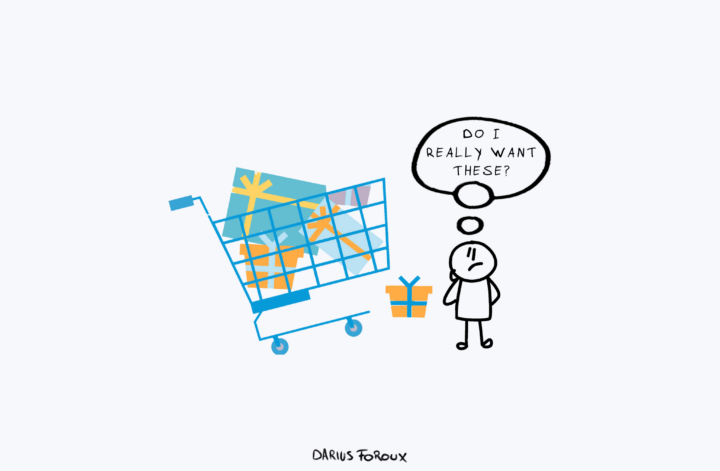
If you’re afraid of looking poor, you’ll overspend. If you’re afraid of looking unimpressive, you’ll perform. If you’re afraid of being underestimated, you’ll waste energy proving yourself.
And when you waste energy, you can’t make any true progress. You focus on the wrong things, and as a result, you miss out on the true opportunities to make good money.
The truth is that most modern people don’t chase wealth. They chase the appearance of wealth.
As long as other people think they are rich, they’ve accomplished their goal.
Seneca’s point was simple: remove the fear of looking ordinary and living plainly.
Ask yourself, Is this what I was so scared of? Cheap clothes? Simple meals? A few raised eyebrows?
When you’re no longer afraid of looking unimpressive, you’re free to build something real.
The driver who asked for five euros
One of my mentors is now close to eighty and one of the wealthiest people in the Netherlands.
His family had a manufacturing business, so he was born with some wealth. But their family was nowhere near as rich as he became later.
He didn’t coast. In his twenties, he drove deliveries for their company by himself. Just straight-up hard and manual work.
A mutual acquaintance once told me a story his father used to share. They bought equipment from my mentor.
Every time my mentor delivered goods to them, he’d ask, “Do you have a fiver? I haven’t eaten lunch.”
Meanwhile, he was already earning good money.
The father would laugh and say, “He has money. He just doesn’t want to spend it.” And then he would give him some cash.
That’s what I call the poor mindset. No matter how much money you have, act poor.
No signaling. No need to show that he was doing well. No ego attached to image.
Just focus.
Why I love flying under the radar
Those examples changed how I see success.
For the past several months, I’ve been renovating our house. Painting, lifting, fixing things. I’ve been wearing the same old Timberland boots I bought in college. They’re worn out. The leather is cracked. They look like they belong on a construction site.
I go to the office with my work outfit. To the store. To meetings. I don’t really care.
Sometimes, when we visit a fancy restaurant or an expensive hotel, I get looks. That’s fine. I don’t spend much time in those places anyway. And if the setting calls for it, I’ll dress a bit sharper. But day to day, I choose simple.
Because I don’t want to live that life.
When you try to look rich, you start optimizing for attention. When you try to look smart, you protect your image instead of improving your skills.
Looking ordinary gives you a big advantage: Peace of mind.
You don’t care. So you focus on the only thing that matters: Getting the job done.
What job? Anything that you’re working on. You get it done to the best of your ability, without getting distracted.
The quiet advantage
We live in a world obsessed with signaling.
- How to sound intelligent.
- How to look wealthy.
- How to project status.
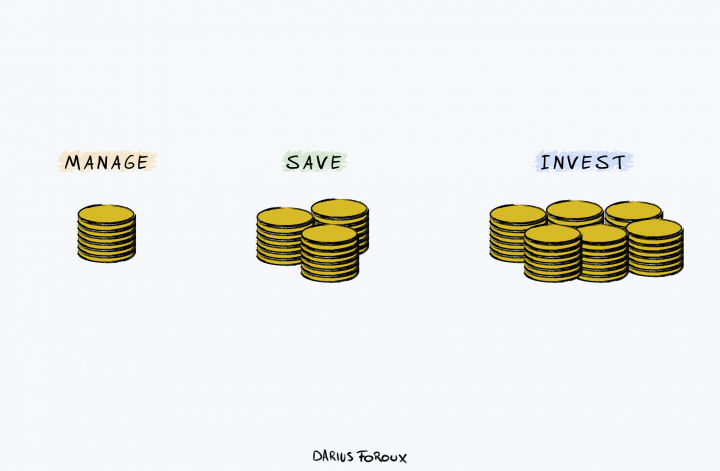
Very few are actually interested in what it truly takes to build wealth.
Patience, discipline, repetition, saving, and working hard. No one cares.
People just want shortcuts. And they want to get recognition so they feel important.
Too much attention is dangerous. It feeds your ego. It distracts you. It tempts you to perform for applause instead of results.
Will understood that. My mentor understood that. Seneca understood that two thousand years ago.
If you can walk into a room and not care whether people think you’re successful, you’re free.
And when you’re free from image, you can focus on substance.
You don’t have to look rich to become rich.
In fact, the less you care about looking rich, the better your odds that you actually will.