Most people think trading means you need to be active. You sit in front of several screens, watch every price move, and buy and sell stocks all day.
I do the opposite.
Sure, I follow the market every day. I read earnings reports, look at charts, and track companies. But I don’t trade daily. My goal is to find one or two good opportunities a year.
That’s all.
That also means that I don’t find any opportunities most of that time.
That’s fine because my long-term investments keep compounding in the background.
Trading is simply part of my investing strategy. I do it because I enjoy studying businesses and market psychology.
And yes, I want to make a profit.
Let me tell you how I do that.
My 90/10 rule
Let’s start off with the mindset.
My investing philosophy is simple: Build wealth over the long term and don’t take risks that affect your sleep.
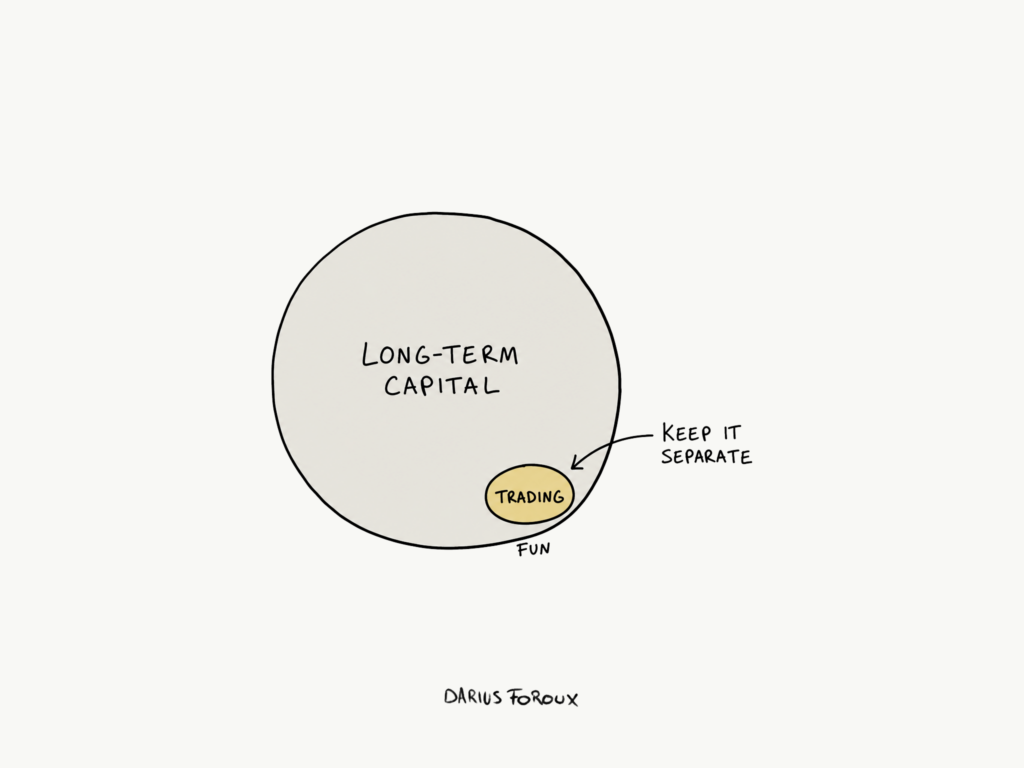
That’s why I use my 90/10 rule. I generally put 90% of my stock allocation in an S&P 500 index fund and use 10% for individual stocks.
That ratio isn’t fixed forever. Sometimes I use 80/20 when I have more conviction and see a strong opportunity. And when the market is too volatile or I don’t see a good setup, I use 100/0.
That doesn’t mean I sell my long-term holdings. It means I allocate nothing to active trades. With long-term investing, I want to stay invested and add more when the market is down.
But trading individual stocks is different. There, timing is the whole game.
Sometimes you should go fishing
Here’s a line attributed to Jesse Livermore, one of the greatest traders in history:
“There is a time to go long. There is a time to go short. And there is a time to go fishing.”
He learned that lesson the expensive way. In Reminiscences of a Stock Operator, the character based on Livermore says he lost his first $10,000 because he traded “in and out of season, every day, whether or not conditions were right.”
Many traders still assume that following the market means they need to have a position.
You don’t.
I watch because I want to be ready. Most of the time, I do nothing. I’m waiting for the moment when the business, valuation, sentiment, and price action come together.
What makes a stock interesting?
A stock isn’t interesting because it has dropped 30%, 50%, or even 70%. Sometimes it’s cheap. Sometimes the business is slowly dying.
So I separate the quality of the business from the quality of the stock at the current price.
When I research a company, I look at several factors. I talk more about that in this lesson of the $1M Course (that you have access to as a paid member of my newsletter).
To keep it short, here are five of the most important things:
- Does the company have a real competitive advantage?
- Are revenue, margins, and cash flow getting stronger or weaker?
- What expectations are already priced into the stock?
- Why did the stock fall, and is the long-term thesis still intact?
- What could change the market’s perception of the company?
I look at about 12 quarters of financial results. One quarter doesn’t tell you much.
And I always ask: What does the market believe, and what does the evidence show? That gap often creates an opportunity.
Timing is the trade
People often say, “You can’t time the market.”
For long-term index investing, I agree. I learned that after the 2008 crash. I sold, stayed out, and missed years of gains.
But don’t let anyone tell you timing doesn’t matter when you’re trading individual stocks. You can buy a great business at the wrong time and lose money for years.
Look at Nike. The company still makes good money, but I see a business suffering death by a thousand cuts. It’s facing Hoka and On in running shoes, plus Alo and other online brands in apparel. A famous brand doesn’t guarantee future growth.
PayPal is another example. People still use it. But where will the growth come from?
Netflix is different. The company is still growing. It’s expanding its advertising business and moving into live programming and sports. But even a growing company can become a bad trade when the stock price reflects too much optimism.
These stocks will turn if the business proves the market wrong. That’s the key. I wait for evidence of a reversal.
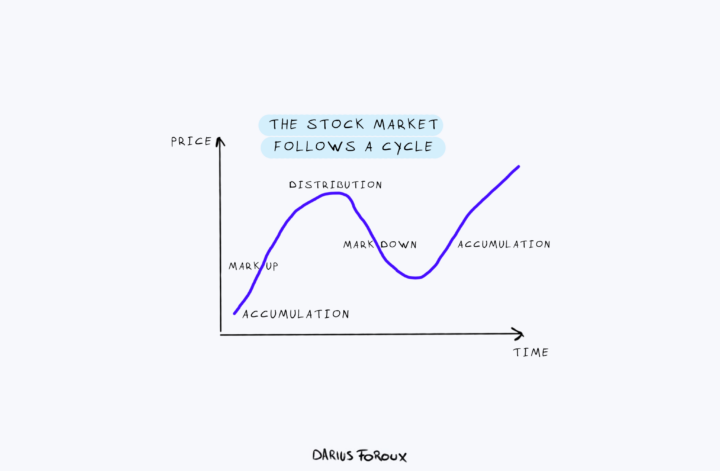
I look for the right side of the V
After a major decline, I don’t want to blindly catch a falling knife. I’d rather buy a little higher after the stock shows that a bottom may have formed.
Maybe bad news stops pushing the price lower. Maybe the stock forms a higher low or starts outperforming the market. At the same time, I want to see the fundamentals stabilize and expectations come down.
Google was a good example. Between January 2024 and the middle of 2025, the stock mostly went nowhere. The dominant story was that Google had lost the AI race.
I became interested in early 2025. The business was still strong, but sentiment had become negative. I bought around May and rode the reversal to a nice return.
Then I sold too early. That happens too.
How I put the trade together
I never buy the entire position at once. If I want to put $10,000 into a stock, I normally build that position over two or three days.
Let’s say the stock trades at $100. I might start with $2,000. If it falls 2% later that day, I add another $2,000. If it trades around $99 the next day, I might buy another $2,000. And if it drops another 3%, I add the final $4,000.
The exact sequence changes. This is a dynamic process. But I decide on the $10,000 maximum before I place the first order. I don’t keep increasing that number because the price goes lower.
And this is where the distinction matters: I might average down while I’m still building the position. I don’t average down after the trade is fully established.
Once the full $10,000 is invested, I don’t add another $1,000 or $2,000 if the stock keeps falling. If it drops about 10% below my average purchase price, I sell and wait for a better entry. Otherwise, you can get stuck in a losing position while telling yourself you’re getting a better price.
So my rules are:
- Decide on the maximum position before buying.
- Build it over two or three days and stay under that maximum.
- Use the average purchase price to set a stop-loss around 10%.
- If the stock doesn’t start moving within about two weeks, or the reason I bought changes, get out.
- Once I’m up more than 20%, take the profit or use a 10% trailing stop.
Remember to sell!
Remember this: You’re only a trader when you buy and sell.
When you invest for the long term, you can hold through corrections. But when you enter a trade, you need an exit plan.
Before I buy, I want to know:
- Why am I buying?
- What would make my idea wrong?
- How much am I willing to lose?
- What signs would tell me the move is ending?
When a trade works, I take profit. You don’t need to sell everything at once. But you must avoid turning a good profit into a loss.
Selling too early hurts. I know that feeling.
But riding a winner all the way back down hurts more.
Build your own trading system
Everyone needs a trading system that fits their personality, knowledge, and tolerance for risk. My system might give you ideas, but you shouldn’t copy it blindly.
Read the best books you can find. I learned a lot from Jesse Livermore, the Stock Market Wizards series, and Stan Weinstein. Study how they think about timing, losses, and trends.
Then observe yourself.
Do you become impatient when you’re in cash? Do you hold losers because you don’t want to admit you’re wrong? Do you sell winners because you’re afraid of losing a small profit?
Your answers matter more than another technical indicator.
For me, good trading means following the market every day and acting rarely. I wait for a good business, lower expectations, negative sentiment, improving fundamentals, and a price reversal.
One or two opportunities a year is enough. The rest of the time, I keep investing, protect my capital, and go fishing.
This article is for educational purposes and isn’t financial advice.

My new course, AI Pro, is out now.