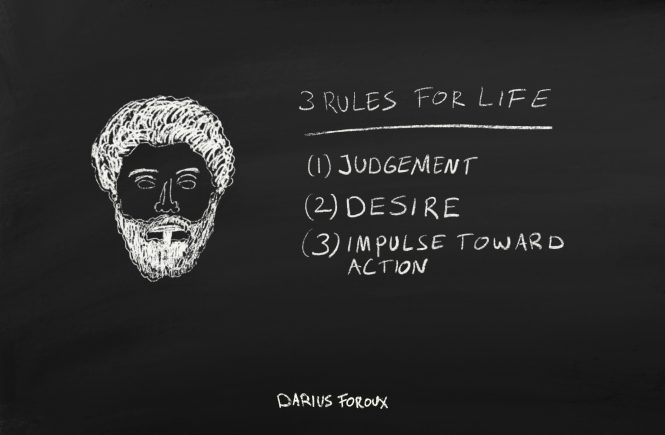
Thus Spoke Zarathustra by Nietzsche had been on my reading list for years. I finally got to it recently.
While I didn’t really like the book, there was one chapter that really got to me, called “Of Voluntary Death.”
This is the idea:
Live so fully and intentionally that when death comes, it feels like a completion rather than an interruption.
I love that.
Think about it. Most of us don’t live that way.
We drift, we delay, we stay on a trajectory that we know is not the right one.
And then one day it’s over…
This is why we fear death.
Nietzsche wrote:
“To be sure, he who never lived at the right time could hardly die at the right time! Better if he were never to be born!”
A person who never truly lived, who drifted, obeyed, delayed, copied others, and never became themselves, cannot really “die at the right time” either.
Why?
Because for Nietzsche, the “right time” is not about age. It is about ripeness.
He admired the idea of a person who lives with such intensity, purpose, and self-command that even death becomes part of their life, not just something that happens to them.
The courage to live on your own terms
A person should live so fully that, when death comes, it feels like a completed arc.
If you never had the courage to live your own life, make your own values, take action, and become who you are, then your death will also be passive.
It will just be a biological shutdown. Not the end of a life well-lived.
Now here comes the question: What does a life well-lived look like?
Here’s how Nietzsche looked at it:
“The man consummating his life dies his death triumphantly, surrounded by men filled with hope and making solemn vows.”
Surrounded by men filled with hope. That image has stayed with me. He’s describing someone whose life inspired others to be better.
Someone who, at the end, is surrounded not by grief alone but by people who are motivated to continue what that person started.
That’s legacy. Not fame. Not money. Not a building with your name on it.
Just people who were made better by knowing you.
Your kids. Your friends. Your colleagues. The person you mentored ten years ago.
The reader who changed their life because of something you wrote. Anyone who crossed your path and left the encounter slightly different.
I think you can only accomplish that by truly living your life on your own terms.
But most people live timidly, afraid of what others think of them, not taking any risks, and never growing.
We must grow, otherwise we die
Then Nietzsche gets harder:
“For many a man, life is a failure: a poison-worm eats at his heart.”
He’s talking about that creeping sense that you’re not living the way you know you should.
That you’re wasting time. That you’re holding back. That there’s a version of yourself you’re not becoming.
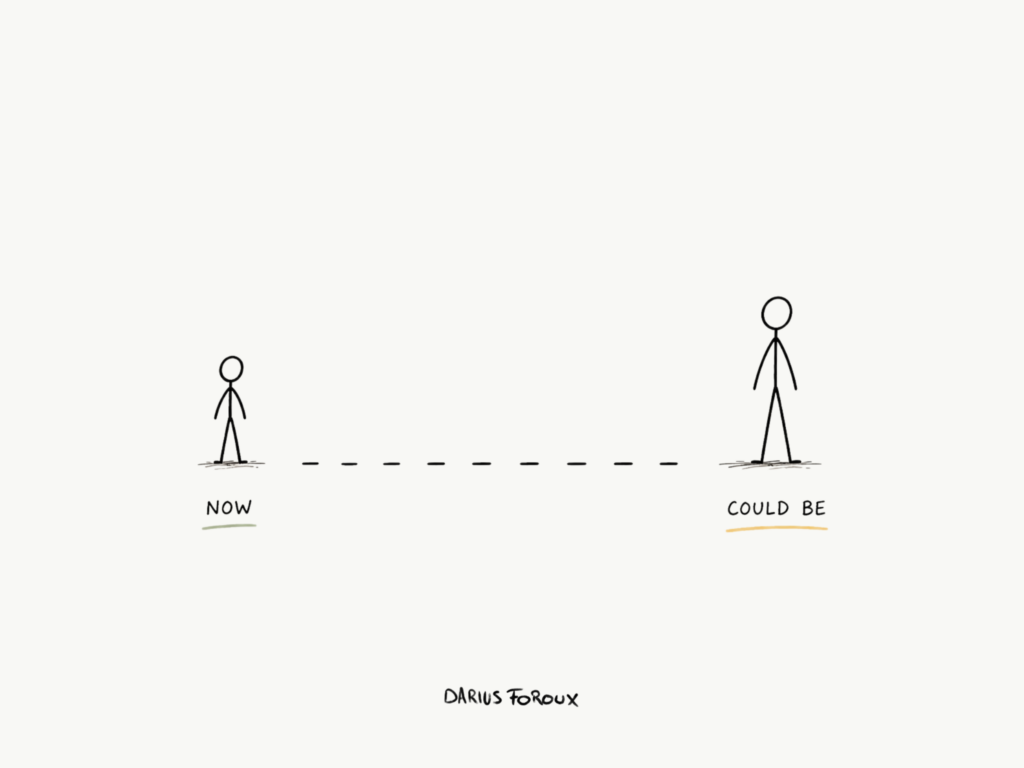
That’s the poison-worm. Not circumstances. Not bad luck. The gap between who you are and who you know you could be.
Most people live with that gap their entire lives and never close it. They stay on the branch not because they can’t fly but because they’re afraid.
Nietzsche says that, “It is cowardice that keeps him fastened to his branch.”
We all know what it feels like to hold on to our branch. We want to go out there in the world and do something, but we can’t.
We stay put.
But that’s like an early death. We must grow, otherwise we die. We must keep moving.
Having a son recently made this concrete for me in a way it never was before.
What I do, he will see. What I value, he will absorb.
There are still so many areas in my life that I want to improve.
How I treat people, how I handle difficulty, how I show up when things are hard…all of that becomes input for who he becomes.
How to live this way practically
Nietzsche closes the chapter with this:
“In your death, your spirit and your virtue should still glow like a sunset glow around the earth: otherwise yours is a bad death.”
I love how he describes it as a sunset glow. Not an explosion or something grand.
Just a warmth that lingers after you’re gone.
Here’s what that looks like in practice:
- Do your work well, not for recognition but because it represents you.
- Be honest with the people around you, even when it costs you something.
- Show up for the people who need you, especially when it’s inconvenient.
- Build things that last longer than the moment.
- Treat the people closest to you as the most important audience, because they are.
None of this is grand. All of it compounds.
The question isn’t whether you’ll be remembered. You will be, by someone, in some way.
The question is what they’ll remember.